
Feed Your Family (and Stretch Your Budget)
We hear it a lot:
“A whole chicken seems expensive.”
At first glance, we understand why. When you’re standing in the kitchen, looking at one bird and doing quick mental math, it can feel like you’re paying more than you want to.
But here’s the truth from real ranch kitchens like ours:
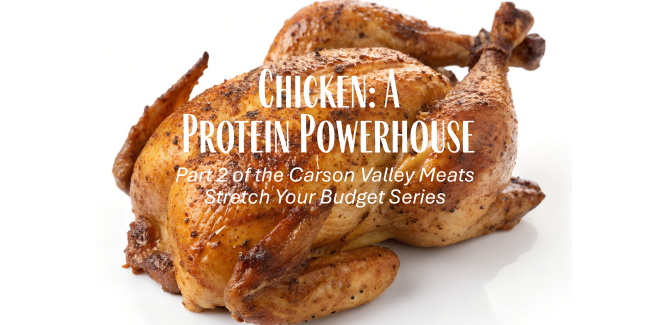
A whole chicken isn’t one meal. It’s several.
When you cook it with intention, chicken becomes one of the most affordable, versatile, and nourishing proteins you can put on the table; especially for a family of four or if you repurpose leftovers for lunch!
Here at the ranch, we roast a chicken one night, then follow up with a casserole and soup, and then we make bone broth for the freezer!
Download your free copy of our Stretch Your Chicken Recipe Book!
Why Chicken Is a Protein Powerhouse
Chicken delivers a lot more than people give it credit for.
One whole chicken provides:
- Over 300 grams of high-quality protein
- All nine essential amino acids
- B vitamins that support energy and metabolism
- Minerals like phosphorus and selenium that support bone and immune health
Protein matters because it:
- Keeps you full longer
- Helps stabilize blood sugar
- Supports muscle health for growing kids and busy adults
- Makes meals actually satisfying
That’s why chicken works so well in family meals — it fuels people, not just plates.
Feeding a Family of Four: The Real Kitchen Math
Let’s talk real kitchen math and avoid sticker shock.
From one whole chicken, you can realistically make:
- Meal 1: Roast Chicken Dinner
- Breasts, thighs, and legs served with simple sides.
Protein per serving: ~30–35g
- Breasts, thighs, and legs served with simple sides.
- Meal 2: Chicken Noodle Soup
- Leftover chicken stretched with vegetables and broth.
Protein per bowl: ~10–15g
- Leftover chicken stretched with vegetables and broth.
- Meal 3: Chicken Pot Pie or Casserole
- Chopped chicken combined with vegetables, gravy, and a crust or biscuit topping.
Protein per serving: ~15–20g
- Chopped chicken combined with vegetables, gravy, and a crust or biscuit topping.
- Meal 4: Bone Broth
- Made from the carcass and used later for soup, rice, or gravy.
That’s four meals from one bird, feeding the same family in different ways across the week.
When you break it down per meal, the value becomes clear and the food keeps working for you.
Stretching Protein Is Smart Cooking, Not Cutting Corners
Stretching chicken doesn’t mean skimping. It means cooking the way families always have:
- Pairing protein with vegetables, grains, and broth
- Using leftovers intentionally
- Freezing portions for later
Soup, pot pie, and casseroles aren’t “filler meals.” They’re smart meals. They turn one protein purchase into multiple nourishing dinners, lunches, and freezer backups.
That’s not being cheap. That’s being resourceful.
Why We Love the 2-Cup Packet Method
When we shred chicken, we bag it in 2-cup portions.
Two cups of cooked chicken provides:
- About 56 grams of protein
- Enough to anchor a family-size casserole when paired with vegetables, grains, cheese, or sauce
Most of the casseroles in our new recipe book are written to use one 2-cup packet, so you can grab, thaw, and cook without guessing. If you want it meatier, add a second packet. Simple as that.
Whole Chickens vs. Individual Cuts
Boneless, skinless breasts have their place, but whole chickens offer something extra:
- Lower cost per pound
- Built-in leftovers
- Bones for stock and broth
- More flexibility in the kitchen
When you buy a whole chicken, you’re buying options.
Chicken That Works for Real Life
Chicken works for families because:
- It cooks simply
- It freezes well
- It adapts to almost any flavor profile
- Everyone at the table will eat it
From classic roast chicken to soup, pot pie, casseroles, and freezer-ready meals, chicken earns its place in the kitchen.
And when that chicken is raised with care, right here in our region, you’re also supporting the agricultural way of life that keeps our valley open and thriving.
The Takeaway
A whole chicken might look like a bigger purchase up front, but when you stretch it across multiple meals, it becomes one of the best values in the food chain.
More protein.
More meals.
Less waste.
That’s ranch-smart cooking. And it’s how we’ve always fed our families.
Download your free copy of our Stretch Your Chicken recipe book here!!