
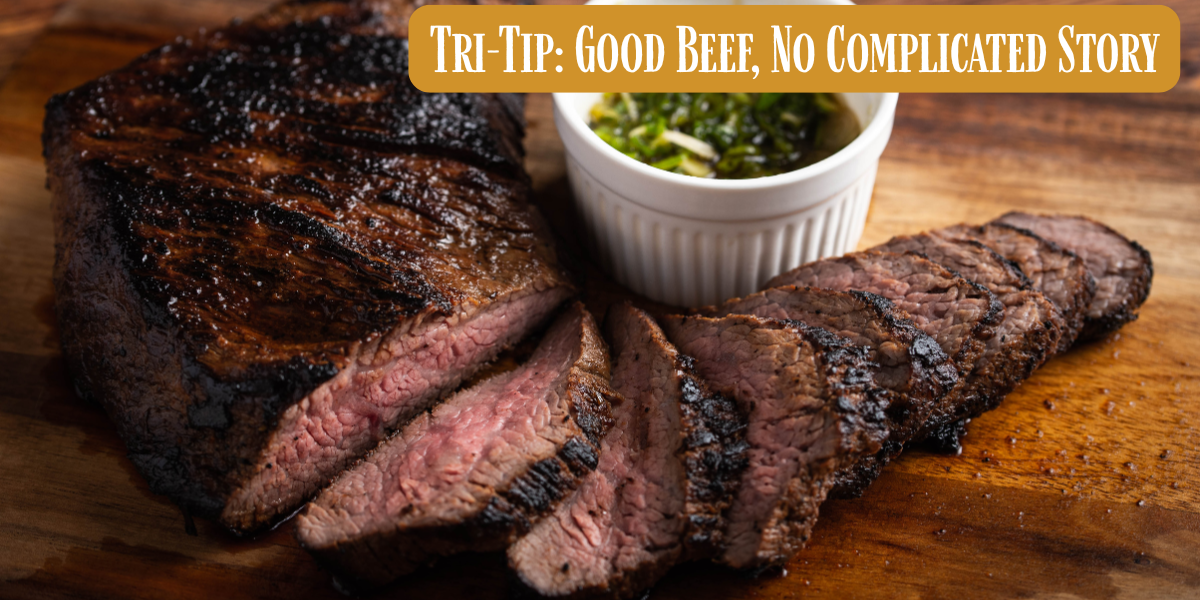
“Tri-tip is one of those cuts that does not need much fooling around. Season it, cook it carefully, let it rest and cut it the right way.” — Mike
Why We Chose It for August
August is still grilling weather in Northern Nevada, but most of us are ready for something a little more useful than another hamburger. Tri-tip works for a weekend dinner, a backyard gathering and the leftovers you need on Monday.
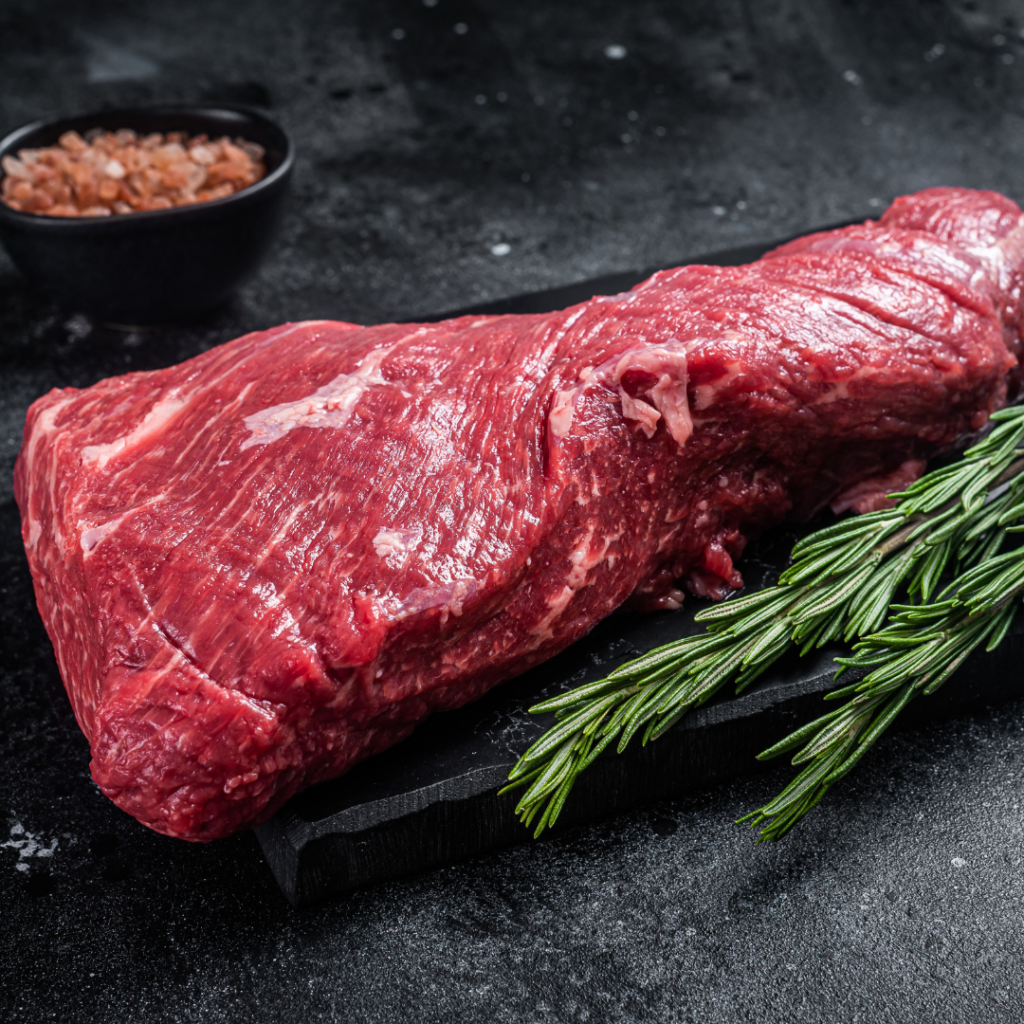
It has good beef flavor, it feeds a group without a lot of ceremony, and it can be cooked on the grill or in the oven. The biggest thing is paying attention to temperature and slicing across the grain.
Mike’s Meat Counter Advice
Do not cook by the clock alone. Tri-tips are not all the same size or thickness. Use a thermometer.
Let it rest before you cut it. You have already waited this long. Give it a few more minutes.
Look at the grain before cooking. It changes direction in a tri-tip, so you may need to divide the roast before slicing.
Slice thinly across the grain. A good roast can seem tough if it is cut the wrong direction.
Some cuts need a long explanation. Tri-tip really does not. It has good beef flavor, feeds a table and works on the grill or in the oven. The trick is not a secret seasoning. It is using a thermometer, giving the roast time to rest and slicing it across the grain. That is what we are featuring in August, along with a recipe card and a practical cooking guide. Good beef. Straight answers. Dinner handled.
Mike’s Simple Garlic-Pepper Tri-Tip
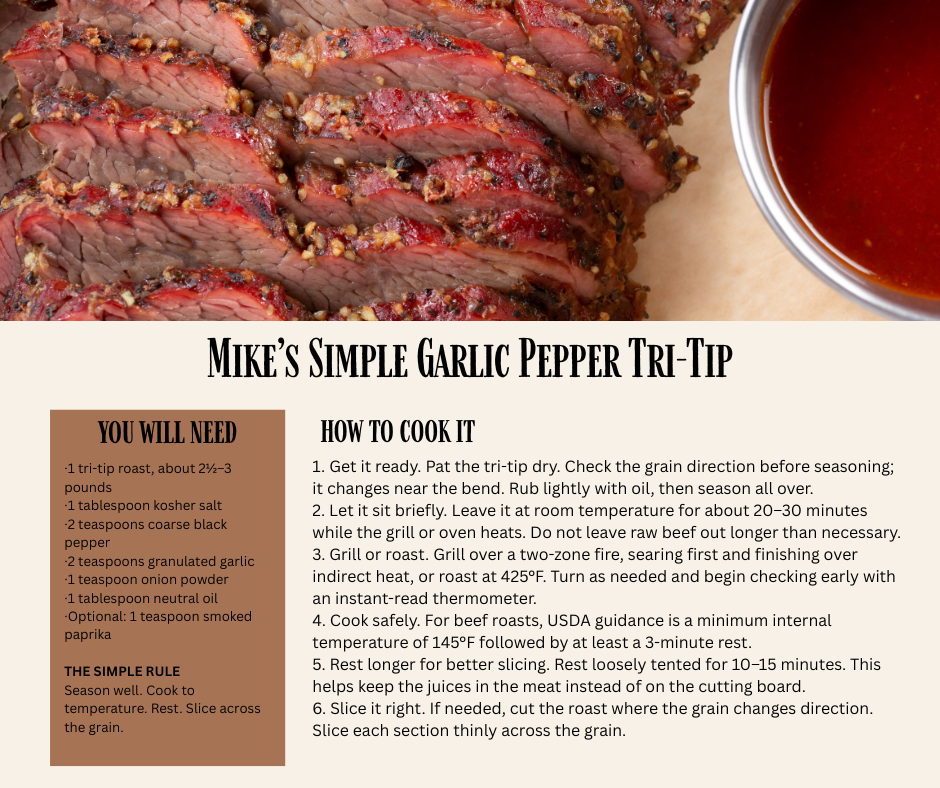
| SERVES 6–8 | PREP: 10 MINUTES | REST: 10–15 MINUTES |
Leftover plan: slice cold for sandwiches, chop for tacos or warm gently with a splash of broth.
THE NO-NONSENSE TRI-TIP GUIDE
How to Buy It, Season It, Cook It and Slice It
1. What Tri-Tip Is
Tri-tip is a triangular roast from the bottom sirloin. It is leaner than chuck, but it still has enough flavor to stand on its own. It is usually best cooked with fairly high heat and served in thin slices.
The roast is not evenly shaped. One end is thinner than the other, which means the thinner end will cook faster. That is not necessarily a problem. It can give you a range of doneness for different people at the table.
2. How Much to Buy
| People | Boneless tri-tip | Planning note |
| 4 | 1½–2 pounds | Little or no leftover |
| 6 | 2–2½ pounds | Comfortable dinner portion |
| 8 | 2½–3½ pounds | Allows for some leftovers |
| 10–12 | 4–5 pounds | Consider cooking two smaller roasts |
3. Seasoning Without Covering Up the Beef
Salt, pepper and garlic are enough. Season the whole roast, including the sides. A dry rub can go on several hours ahead and rest uncovered in the refrigerator, or you can season shortly before cooking.
Marinades are useful when you want a particular flavor, but they are not required to make tri-tip tender. Cooking temperature, resting and slicing direction matter more.
4. Three Good Cooking Methods
Two-zone grill: Sear over the hot side, then move to the cooler side and close the lid. This gives you browning without burning the outside before the center is ready.
Oven roast: Roast at 425°F on a rack or shallow pan. Start checking the internal temperature early, especially on the thinner end.
Reverse sear: Cook more gently over indirect heat or in a lower oven, then finish with a hard sear. This method gives more even doneness but takes longer.
5. Use a Thermometer
Cooking time is only an estimate. Roast size, thickness, starting temperature, weather and grill heat all change the timing. Put the thermometer into the thickest part, avoiding large pockets of fat.
USDA recommends cooking beef steaks and roasts to a minimum internal temperature of 145°F and allowing at least a 3-minute rest. For a better eating experience, we generally rest a tri-tip 10–15 minutes before slicing.
6. Find the Grain Before You Cook
The muscle fibers on a tri-tip do not all run in one direction. Before seasoning, take a quick photo or make a small shallow notch where the grain changes. After cooking, you can divide the roast at that point and slice each section across its own grain.
7. Slice Thinly
This is not a prime rib that needs thick slabs. Thin slices across the grain make tri-tip easier to chew and let a smaller amount feed more people. Hold the knife at a slight angle for wider slices.
8. What to Do With Leftovers
- Sandwiches: Thin cold slices, mustard, horseradish and a sturdy roll.
- Tacos: Chop the meat, warm it gently and add onions, salsa and lime.
- Breakfast hash: Dice with potatoes, onions and peppers; add eggs at the end.
- Salad: Serve chilled or room temperature over greens with tomatoes and a sharp vinaigrette.
- French dip shortcut: Warm slices briefly in beef broth. Do not boil them.
9. Common Mistakes
- Guessing doneness by color instead of using a thermometer.
- Cutting into the roast immediately after cooking.
- Slicing with the grain.
- Cooking the thin and thick ends as though they are identical.
- Reheating leftovers over high heat until they become dry.