
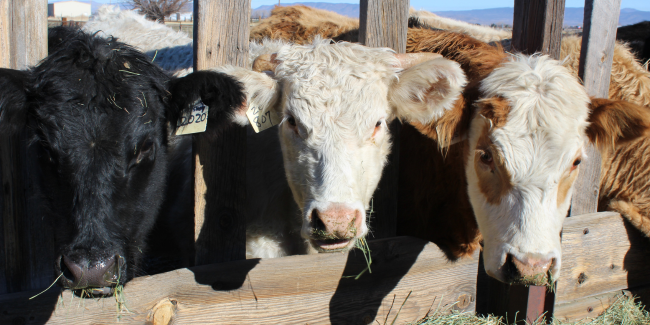
Raising good beef takes a lot. Most of it happens long before you ever see a steak on your plate.
It takes us about two years to raise a beef animal from birth to processing.
That’s two winters of feeding cattle, two summers of managing pastures, and a lot of time spent caring for animals.
Some beef cattle are ready for processing at 14 to 16 months. There are different ways to raise cattle, and some feeding programs are designed to get animals to market sooner.
We’ve chosen a different approach. And there are some pretty good reasons for it.
A Cow’s Stomach Is a Remarkable Thing
Cattle are ruminants. They’ve got a digestive system designed to turn grasses and other forage into the nutrients they need to grow.
Millions of microorganisms in a part of their stomach called the rumen help them do that. Those microorganisms break down the feed, and the cow gets nourishment from the process.
It’s a pretty remarkable system, but you have to take care of it.
When cattle are fed large amounts of grain, especially if their diet changes too quickly or lacks enough fiber, the rumen balance can get out of whack.
There’s a name for that: ruminal acidosis.
The Merck Veterinary Manual explains that rapidly fermenting carbohydrates can increase rumen acidity. If that happens repeatedly or severely enough, the rumen lining can become inflamed or damaged.
In some cases, bacteria can get through that damaged lining, travel to the liver and cause abscesses.
The cattle industry has known about and studied this for decades.
Researchers at Kansas State University have documented the connection between aggressive grain-feeding programs, digestive problems and liver abscesses in feedlot cattle.
Now, that doesn’t mean feeding grain is automatically bad, or that every feedlot has these problems. Good feed management makes a difference. But an animal’s digestive system can suffer when it isn’t properly managed.
And that’s something we take seriously.
We Let Our Pastures Do Their Job
We use rotational grazing, moving cattle through different pastures instead of keeping them on the same ground all the time.
That gives grazed areas time to recover and helps us manage the grass we have available.
Here at the historic Storke Dairy in Gardnerville, we’ve put a lot of work into bringing the ground back into agricultural production. We cut our own hay, manage the fields and raise livestock on land that’s been part of Carson Valley’s agricultural history for generations.
And we pay attention to what the animals are eating.
We try to use the most natural feeds we can find, especially when winter comes around, and the pastures aren’t producing enough to meet their needs.
Good Beef Begins with Good Ground
As we move into the colder months, we’ll be transitioning to winter feeding at our ranch in Newcastle, California. We recently installed a new irrigation system to ensure more consistent forage production and better flexibility for rotational grazing. It wasn’t cheap, and it sure wasn’t easy, but this investment means we’re putting money and labor back into our land instead of just drawing production out of it.
That means planning ahead, making sure we’ve got the feed we need, and keeping an eye on how the animals are doing as their diets and the seasons change. Our feeding decisions depend on the land, and what it – and we – can produce.
Cattle need good nutrition year-round. We’re not trying to rush their growth, and we don’t skimp on feeding them. We do feed grain, but not a lot.
We like consistency, so we feed about a coffee can of grain per day once the calves are weaned from their mothers. We don’t “feedlot” feed. Our yearlings spend their entire lives on pasture, supplemented with hay and some grain, especially in winter. In spring and summer, the grass is usually plenty, so it keeps them fat and sassy. I know exactly what’s in the grain – it’s good enough for me to eat.
Sometimes a Cow Needs a Little Help
I’ve had cattle develop digestive problems over the years. It happens, even when you’re doing your best to take care of them.
I remember one cow in particular that needed some extra attention to get her digestive system back on track.
We were able to help her, and she recovered.
But we don’t make digestive treatments or supplements part of the routine just because they’re available. We prefer to manage their health through good feeding practices and pay attention when an animal needs something more.
There’s a difference between caring for an animal that’s having a problem and routinely giving something to every animal.
For us, the first priority is feeding them properly and keeping a close eye on them.
Mike Sees Another Side of the Story
Mike has been in the meat business for nearly 30 years. He’s worked in butcher shops and meat-processing operations, including at the University of Nevada, Reno.
He’s seen a lot of cattle come through processing over the years.
Occasionally, he’s also seen what can happen inside an animal when something has gone wrong.
He remembers encountering a beef liver with extensive abscesses during processing.
You can’t look at one liver and know everything about how that animal was raised. Liver abscesses can have multiple contributing causes.
But veterinary researchers have linked certain feeding practices, rumen damage and liver abscesses, particularly in cattle fed high-concentrate diets.
A research review published in the Journal of Animal Science reported liver abscesses in roughly 12% to 32% of cattle in the feedlots examined in the studies it discussed. The rates varied depending on feeding and management practices.
That’s not a small issue. And it’s one reason we believe people should understand that what goes into raising an animal matters long before that animal reaches the butcher.
Two Years Is a Long Time to Raise Beef
Some operations try to shorten the time it takes to get cattle to market.
Keeping an animal for two years costs money.
You’ve got feed to buy or raise, water to provide, fences to maintain and land to manage.
You’ve got winter weather to prepare for, summer heat to deal with, and animals that need attention every single day.
It doesn’t matter if it’s Thanksgiving morning or Christmas Day. The cattle still need feeding.
And when you’re a small operation, every one of those expenses matters.
We’ve been asked why locally raised beef can cost more than what’s available at the grocery store.
Well, part of the answer is right there.
We’re caring for our animals for about 24 months before they go to processing. We have our own land to maintain, hay to put up and a feeding program to manage through the seasons.
We aren’t trying to be the fastest operation around. We want to raise healthy cattle, produce beef we’re proud of and keep our ranches working for the next generation.
There’s More to a Steak Than the Price on the Package
I’ve said before that they’re not making any more dirt.
That’s why preserving our agricultural ground matters so much to me.
The pastures we graze, the hay we grow and the animals we raise are all connected. How we manage one affects the others.
We’re proud to have brought the historic Storke Dairy back to life. We’re proud of the work we’ve done on our Newcastle place, and we’re proud of the beef we produce.
It takes us about two years to raise it. We think those two years matter.
And now you know a little more about what goes into them.
Sources and Further Reading
The following research supports the veterinary and feeding information discussed in this article. Karin and Mike provide our descriptions of Carson Valley Meats’ practices and Mike’s experience.
-
- Merck Veterinary Manual. Liver Abscesses in Cattle. Explains how high-carbohydrate diets, rumenitis and bacterial infection can contribute to liver abscesses.
- Merck Veterinary Manual. Subacute Ruminal Acidosis in Cattle and Sheep. Discusses rumen health, dietary fiber, feeding transitions and methods of preventing acidosis.
- Nagaraja, T. G., and Lechtenberg, K. F. (2007). Liver Abscesses in Feedlot Cattle. Veterinary Clinics of North America: Food Animal Practice, 23(2), 351–369. Reviews the relationship between intensive grain-feeding programs and liver abscesses.
- Nagaraja, T. G., and Chengappa, M. M. (1998). Liver Abscesses in Feedlot Cattle: A Review. Journal of Animal Science, 76(1), 287–298. Reports liver abscess prevalence in studied feedlot cattle and examines dietary management factors.
- Merck Veterinary Manual. Prevention of Common Nutrition-Related Disorders in Beef Cattle. Provides recommendations for gradual feed changes, consistent feeding and adequate physically effective fiber.